

A production line for waste tire rubber powder constitutes a significant environmental protection initiative; it transforms discarded tires into valuable resources, mitigates environmental pollution, and generates economic benefits for society. This article provides a detailed overview of the process workflow, equipment configuration, market outlook, and environmental significance of such a production line, aiming to offer readers a comprehensive and in-depth understanding of the subject.
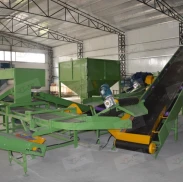
1.Process Flow of the Waste Tire Rubber Powder Production Line
The process flow of a waste tire rubber powder production line primarily comprises the steps of tire shredding, rubber powder separation, screening, and packaging. First, after undergoing pretreatment, waste tires are fed into a tire shredder; through the cutting and impact action of high-speed rotating blades, the tires are broken down into small fragments. Next, these shredded tire fragments enter a rubber powder separator, where, through the application of friction and impact forces, impurities-such as steel wires and fibers-are separated from the rubber. Subsequently, the separated rubber fragments are fed into a screening machine, where they are sorted according to specific particle size requirements to yield rubber powder of various specifications. Finally, the processed rubber powder is packaged and becomes a marketable product.
2. Equipment Composition of the Waste Tire Rubber Powder Production Line
The equipment for a waste tire rubber powder production line primarily comprises tire shredders, rubber powder separators, screening machines, and packaging machines. Among these, the tire shredder serves as the core component of the production line; its performance directly determines the effectiveness of the subsequent processing stages. The rubber powder separator is the critical device responsible for effectively separating impurities-such as steel wires and fibers-from the rubber material. The screening machine is tasked with sorting the separated rubber granules into various specifications to meet market demands. Finally, the packaging machine packages the screened rubber powder, thereby facilitating its storage and transportation.

3. Market Prospects for Waste Tire Rubber Powder Production Lines
With the growing awareness of environmental protection and the increasing emphasis on resource recycling, the market prospects for waste tire rubber powder production lines are becoming increasingly promising. On one hand, as waste materials, discarded tires can cause environmental pollution if not disposed of properly; however, waste tire rubber powder production lines enable the conversion of these discarded tires into valuable resources, thereby realizing the goal of resource recycling. On the other hand, as a vital industrial raw material, rubber powder is widely utilized in sectors such as rubber products, waterproofing materials, and coatings, commanding a substantial market demand. Consequently, waste tire rubber powder production lines offer broad market prospects and generate significant economic benefits.
4. The environmental significance of the waste tire rubber powder production line
The environmental significance of the waste tire rubber powder production line is very significant. First of all, the disposal of waste tires has always been a difficult problem in the field of environmental protection. If not handled properly, it will cause serious pollution to the environment. The waste tire rubber powder production line can convert waste tires into valuable resources, avoiding the random discarding and burning of tires, and effectively reducing environmental pollution. Secondly, as a renewable resource, the application of rubber powder can reduce dependence on natural rubber and reduce resource consumption. In addition, the operation of the waste tire rubber powder production line can also create employment opportunities and promote the development of the local economy.

In summary, a production line for rubber powder derived from waste tires represents an industrial project with broad market prospects and significant environmental significance. Through an examination of its process workflow, equipment configuration, market outlook, and environmental implications, it becomes evident that such a production line plays a vital role in fostering the development of the environmental protection industry and promoting resource recycling.


